 Dr Peter Santa Maria, MD, PhD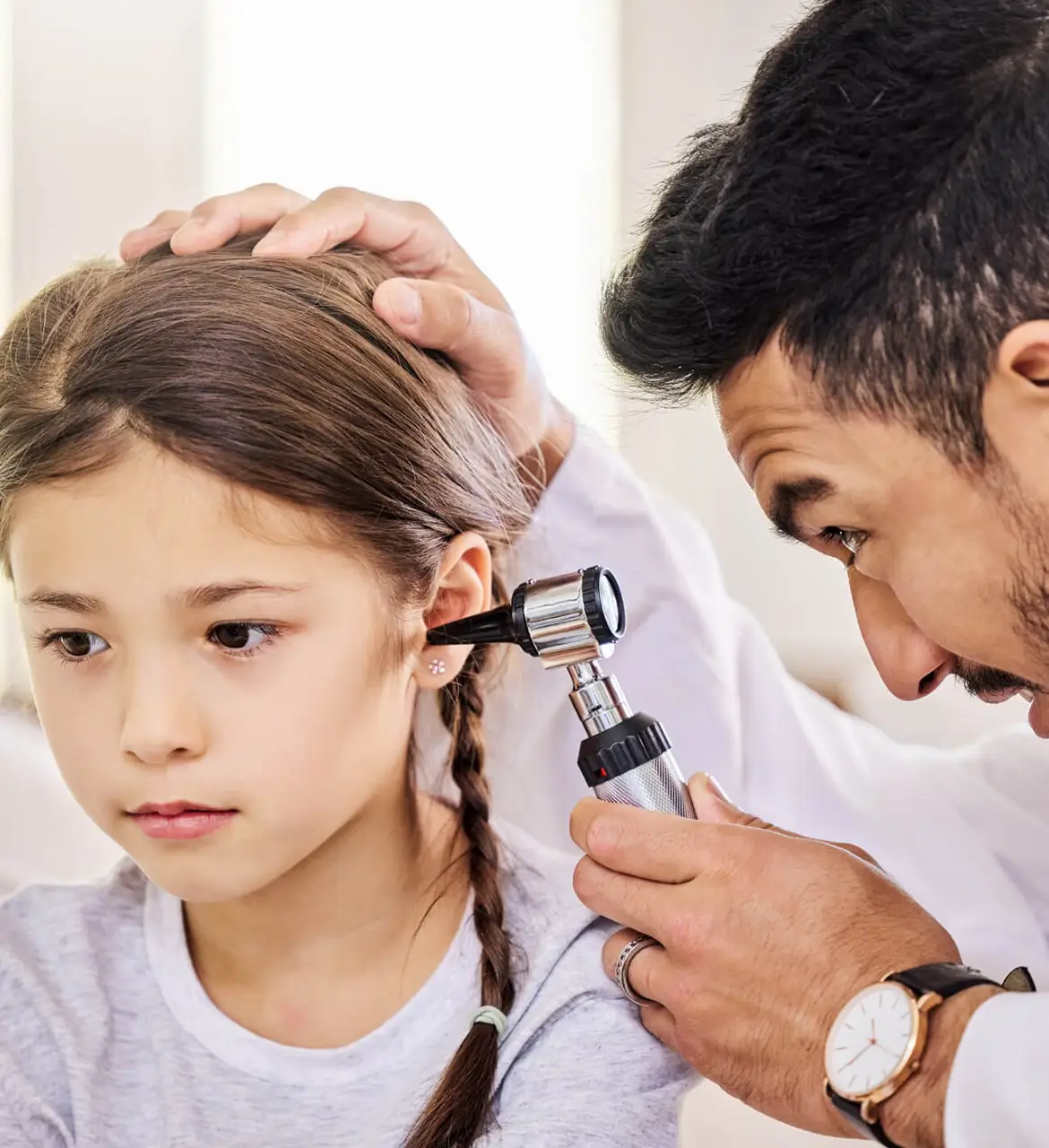
If your child seems to hear inconsistently, Otitis Media with Effusion may be the reason
If your child keeps failing school hearing tests, asks “what?” repeatedly, or seems inattentive in class, the cause may not be behavioral at all. A very common childhood condition called otitis media with effusion (OME), also known as middle ear fluid or chronic ear infections, is the leading causes of temporary hearing loss in children.
OME occurs when fluid builds up silently behind the eardrum without signs of an active ear infection. Unlike a typical ear infection, children with OME often have:
- No fever
- No severe ear pain
- No obvious illness
Instead, the main symptom is usually muffled hearing that comes and goes over weeks or months.
What is Otitis Media with Effusion (OME)?
OME happens when fluid becomes trapped in the middle ear space behind the eardrum.
Normally, the middle ear is ventilated by the Eustachian tube, a small channel connecting the ear to the back of the nose and throat. In young children, this tube is shorter, narrower, and more horizontal, making it easier to become blocked.
When the Eustachian tube does not function properly:
- Pressure builds inside the middle ear
- Fluid begins to accumulate
- Sound becomes harder to transmit normally
Over time, the fluid can thicken further increasing hearing loss.
What are the signs of OME in children?
One reason OME is frequently missed is that children rarely say, “I can’t hear properly.” Instead, the symptoms often appear as speech, behavioural, or learning concerns.
Common signs of OME include:
Hearing and listening difficulties
- Asking for repetition frequently
- Turning the TV volume up
- Not responding when called
- Difficulty hearing in noisy rooms
Speech and language concerns
- Delayed speech development
- Unclear pronunciation
- Difficulty distinguishing similar sounds
Behaviour and attention changes
- Frustration or irritability
- Appearing inattentive at school
- Social withdrawal
- Difficulty following conversations
School and learning difficulties
- Trouble following instructions
- Struggling with reading or phonics
- Reduced classroom participation
How much hearing loss can OME cause?
OME usually does not cause complete hearing loss, but it can significantly muffle sound during an important stage of language and learning development.
Children with persistent fluid in the ear may hear as though they are wearing foam earplugs.
Typical hearing loss during OME episodes is often around 20–30 decibels, which can make speech harder to follow, especially in classrooms or noisy environments.
Can OME affect speech and development?
Research has linked persistent OME in early childhood with delays in:
- Expressive language
- Speech clarity
- Phonological awareness
- Early reading skills
Many children catch up fully once hearing improves, but persistent hearing difficulties during early development deserve attention.
The risk is usually greatest when:
- Fluid persists for months
- Hearing loss is ongoing
- Episodes recur frequently
- The child is very young during critical language development
Why does OME happen?
Several factors can contribute to OME, including:
- Colds and viral infections
- Allergies
- Enlarged adenoids
- Recurrent upper respiratory infections
- Eustachian tube dysfunction
Young children are especially prone because their ear anatomy has not fully matured yet.
How is OME diagnosed?
OME is usually diagnosed through:
- Examination of the eardrum
- Hearing tests
- Tympanometry (pressure testing of the middle ear)
Because symptoms can fluctuate, some children pass hearing tests one month and fail the next.
Persistent hearing changes, speech concerns, or recurrent failed school hearing screens are good reasons to seek assessment.
What are the treatment options for OME?
Watchful waiting
Most episodes of OME improve on their own within about three months. For many children, careful monitoring is appropriate initially.
Medications
Antibiotics are generally not helpful because OME is not an active bacterial infection. Decongestants and antihistamines also have limited evidence for benefit.
Ear tube surgery
If fluid persists and hearing loss begins affecting development, speech, or quality of life, doctors may recommend tympanostomy tubes (ear tubes).
This procedure places small ventilation tubes into the eardrum to allow air into the middle ear and fluid to drain out.
Although effective, surgery requires general anesthesia and, like any procedure, carries potential risks and complications that families carefully weigh against the benefits
Autoinflation
Autoinflation is a non-surgical technique that helps open the Eustachian tube by gently increasing pressure at the back of the nose.
Historically, many autoinflation methods have been difficult for younger children to perform correctly, limiting widespread use. Earflo was developed as a more child-friendly approach intended to help children perform pressure equalization therapy during natural swallowing and drinking routines.
What can parents do at home?
While monitoring OME, small changes can make hearing easier for children day to day.
Helpful strategies include:
- Seating your child near the front of the classroom
- Reducing background noise at home
- Facing your child when speaking
- Speaking clearly and naturally
- Letting teachers know about hearing difficulties
- Monitoring speech and language development
When should you see a doctor?
You should consider medical evaluation if your child:
- Frequently fails hearing tests
- Has hearing difficulties lasting more than a few weeks
- Shows speech or language delays
- Has recurrent fluid in the ear
- Seems inattentive or frustrated due to hearing difficulties
- Has repeated ear infections
Persistent hearing issues during childhood are worth assessing early, particularly during key developmental years.
Frequently asked questions about OME
Is OME the same as an ear infection?
No. OME involves fluid behind the eardrum without active infection. Children often do not have fever or severe pain.
Can OME go away on its own?
Yes. Many cases resolve naturally within a few months.
Does OME always require surgery?
No. Many children improve without surgery, though ear tubes may help when hearing loss or persistent fluid becomes significant.
Can OME affect speech development?
Persistent hearing loss during early childhood may contribute to speech and language delays in some children.
Why does my child pass one hearing test and fail another?
Fluid levels can fluctuate over time, causing hearing to improve temporarily and then worsen again.
Key takeaways
- OME is one of the most common causes of temporary hearing loss in children.
- Symptoms are often subtle and may appear as behavioral or learning difficulties.
- Most cases improve naturally, but persistent hearing loss deserves attention.
- Early recognition may help support speech, learning, and development.
This article is for informational and educational purposes only and does not constitute medical advice. Always consult a qualified healthcare provider regarding your child’s specific situation.
About the Author
Dr Peter Santa Maria, MD, PhD
Professor & Division Chief of Otology and Neurotology
Vice Chair of Translational and Clinical Research
University of Pittsburgh
Dr Santa Maria is an Ear Nose & Throat (ENT) surgeon-scientist specializing in advanced ear disease, hearing loss, and Eustachian tube disorders.
Disclosure: This article was written in connection with Earflo, an FDA-cleared device for negative middle ear pressure. Dr. Peter Santa Maria is a co-inventor of Earflo and holds equity in the company.