 Dr Peter Santa Maria, MD, PhD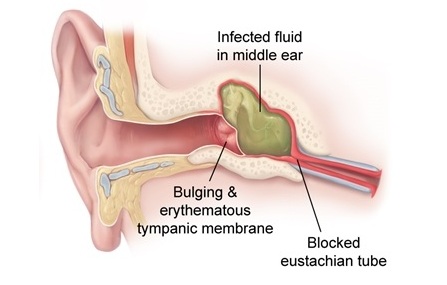
OME is common in children and may cause few obvious symptoms, making it easy to miss. This article explains what OME is, how it differs from an ear infection, how it can affect hearing and daily life, and what treatment or follow-up may be appropriate.
OME is common, often silent, and frequently missed — here’s what parents need to know
If your child has been told they have glue ear, middle ear fluid, or otitis media with effusion, it is natural to feel confused — particularly if they seem fine, have no obvious ear pain, and have not recently had an ear infection.
Otitis media with effusion (OME) is one of the most common conditions in childhood. Between 80 and 90 percent of children experience at least one episode before school age, with more than 2.2 million new cases diagnosed in the United States each year. Most episodes resolve on their own — but some do not, and when OME persists, it can quietly affect a child’s hearing, speech, and learning in ways that are easy to mistake for something else.
What is otitis media with effusion?
Otitis media with effusion is fluid in the middle ear without an active infection. There is no fever, no visible pus, and usually no significant ear pain — but the fluid reduces how clearly sound travels through the middle ear, causing temporary hearing loss.
The middle ear is a small air-filled space behind the eardrum. Under normal conditions, the Eustachian tube — the narrow channel connecting the middle ear to the back of the nose and throat — opens briefly with each swallow to ventilate the space and allow any fluid to drain. When the Eustachian tube does not function properly, fluid accumulates and stays.
OME most commonly develops after a cold or ear infection, when the Eustachian tube remains swollen or congested even after the acute illness has passed. It can also develop without a preceding infection, simply because the tube is not opening adequately.
Bottom line: OME is not an ear infection. It is fluid that has collected — and got stuck — in the middle ear, usually because the Eustachian tube is not draining it the way it should.
Is OME the same as an ear infection?
No — OME is middle ear fluid without an active infection. An ear infection (acute otitis media) involves fluid together with signs of acute inflammation: ear pain, fever, irritability, and sometimes a bulging or red eardrum.
The two conditions are related, however. Acute ear infections commonly leave fluid behind after the infection resolves, resulting in OME. That residual fluid may then persist for weeks or months — the child no longer has fever or significant pain, but may still experience muffled hearing or a sensation of blocked ears.
The relationship can also work in the other direction. Persistent middle ear fluid and poor Eustachian tube function create an environment that makes the next ear infection more likely. A child can also have OME at the same time as an acute infection — so the presence of fluid does not rule out an active infection, and the presence of an active infection does not mean there is no underlying chronic fluid problem.
What are the symptoms of OME or glue ear in children?
The most common symptom of OME is muffled or reduced hearing — but many children have no obvious symptoms at all. Because there is no pain or fever, OME can persist for months before a parent notices anything is different.
What makes OME particularly easy to miss is that children rarely say ‘I can’t hear properly.’ Instead, the signs appear as behaviour, speech, or learning concerns that can be — and frequently are — mistaken for inattentiveness, developmental delays, or distraction. A child who hears well one-on-one in a quiet room may struggle significantly in a noisy classroom.
Hearing and listening
- Asking ‘what?’ or asking for things to be repeated
- Turning the television or tablet volume up
- Not responding when called from another room
- Mishearing words or missing parts of sentences
- Needing to see the speaker’s face to follow conversation
Speech and language
- Unclear or difficult-to-understand speech
- Slower vocabulary growth than expected
- Difficulty with rhymes or early reading sounds (phonics)
Behaviour and attention
- Appearing inattentive, ‘in their own world,’ or easily distracted
- Increased frustration, particularly in noisy settings
- Withdrawing from group activities or conversation
- Inconsistent attention — seeming attentive some days but not others, as fluid levels fluctuate
School and learning
- Difficulty following classroom instructions
- Struggles with phonics or early reading
- Teacher feedback about attention or participation
New fever, significant ear pain, or drainage from the ear is not typical of uncomplicated OME and should prompt assessment for an active ear infection.
What causes OME in children?
OME develops when the Eustachian tube fails to ventilate or drain the middle ear effectively. Children are more susceptible than adults because their tubes are shorter, more horizontal, and still developing — making them easier to block and less efficient at draining fluid.
Common factors associated with OME include:
- A recent cold or upper respiratory infection
- Fluid remaining after acute otitis media
- Repeated respiratory infections, particularly in children in childcare
- Nasal congestion
- Enlarged or inflamed adenoids
- Eustachian tube dysfunction
- Craniofacial conditions that affect Eustachian tube structure or function
Allergies may contribute to nasal congestion in some children, but allergy treatment is not a routine treatment for clearing middle ear fluid unless the child has a separately diagnosed allergic condition requiring management in its own right.
How much hearing loss can OME cause?
OME typically causes a mild to moderate conductive hearing loss — on average around 10 to 15 decibels, though the range extends up to 45 decibels in more significant cases. This is the equivalent of hearing through foam earplugs, or as if someone is speaking from the next room.
In a quiet room, one-on-one, a child with OME may manage reasonably well. In a busy classroom, that margin disappears. The hearing loss can also fluctuate as fluid levels and middle ear pressure change — which is why a child may pass one hearing test and fail another, and why their listening ability can seem to vary unpredictably from day to day.
OME is the leading cause of temporary conductive hearing loss in children. For most otherwise healthy children, the hearing loss resolves when the fluid clears and causes no lasting damage. The concern arises when fluid persists for months during a critical period of language development — particularly in children who already have speech, language, or developmental concerns.
Can OME cause a child to fail a hearing test?
Yes — middle ear fluid can temporarily reduce hearing and cause a child to fail a school hearing screening or formal hearing assessment. A failed test result should always be followed up, even if the likely cause seems to be fluid.
A failed screening does not confirm permanent hearing loss. But it does warrant further assessment — ideally tympanometry to measure middle ear pressure and eardrum movement, and age-appropriate audiometry to document how much hearing is being affected.
If your child has been failing hearing tests, read [My Child Keeps Failing Hearing Tests. Could It Be Otitis Media with Effusion?] for more detail on what those results mean and what to do next.
Is OME connected to recurring ear infections?
Yes — OME and recurring ear infections are closely linked. An acute ear infection almost always leaves fluid behind after the acute phase resolves, producing OME. That persistent fluid and the poor Eustachian tube function behind it make the middle ear more susceptible to the next infection.
Between infections, a child may continue to have OME — no fever, no acute pain — but still experience muffled hearing or a sensation of blocked ears. Persistent fluid and recurrent infections are two sides of the same underlying problem: a Eustachian tube that is not ventilating the middle ear adequately.
For more on why ear infections keep recurring, read [Why Does My Child Keep Getting Recurring Ear Infections?]
How is OME diagnosed?
OME is diagnosed by examining the eardrum and confirming signs of middle ear fluid, usually supported by tympanometry to objectively measure middle ear pressure and eardrum movement.
During an ear examination, a clinician looks for changes in the position, colour, or mobility of the eardrum — a retracted, dull, or opaque eardrum can indicate fluid behind it. Pneumatic otoscopy uses a gentle puff of air to assess how well the eardrum moves. Tympanometry provides an objective pressure measurement and is particularly useful when the diagnosis is uncertain after physical examination.
Age-appropriate hearing tests can confirm whether the fluid is affecting hearing and provide a baseline for monitoring. A referral to an ENT specialist is appropriate when fluid persists, hearing loss is documented, or the child has recurrent ear problems.
How is OME treated in children?
Treatment depends on how long the fluid has been present, whether hearing is affected, and how OME is influencing communication, development, or daily life.
Watchful waiting
For most children without developmental risk factors and with mild or no hearing loss, an initial period of watchful waiting is appropriate — because many episodes of OME resolve naturally. This is not the same as ignoring the problem. It means actively monitoring hearing and symptoms, keeping follow-up appointments, and using the time to support Eustachian tube function at home.
The watchful waiting period recommended by the AAO-HNSF 2016 guideline is up to three months from the known start of fluid. After three months of persistent fluid with documented hearing loss, treatment should be discussed.
Swallow-coordinated autoinflation — Earflo
The AAO-HNSF 2016 Clinical Practice Guideline on Otitis Media with Effusion specifically endorses autoinflation of the Eustachian tube during the watchful waiting period — making it the only non-surgical intervention the guideline recommends during surveillance.
Earflo uses swallow-coordinated autoinflation — delivering a gentle, controlled puff of air precisely when the Eustachian tube is already opening naturally during swallowing. This is mechanistically different from techniques that force pressure against a closed tube: because the tube is already beginning to open, less pressure is needed, there is minimal sensation, and there is no aspiration risk.
Two published clinical studies have evaluated Earflo in children with OME (Soto et al., OTO Open 2025; Hura et al., American Journal of Otolaryngology 2026). Across both studies: 99% objective compliance over four weeks of twice-daily home use, an average 12.9–14.2 dB improvement in hearing at two weeks, 91% tympanometric improvement during active device use, and 89% of children — including children who had already met the criteria for ear tube surgery — avoided tympanostomy tubes during the follow-up period. No adverse events were reported in either study.
Classroom and communication support
While hearing is affected, simple classroom adjustments — preferential seating near the teacher, written backup for verbal instructions, reducing background noise — can meaningfully reduce the impact on learning. Letting the school know about a child’s temporary hearing difficulty is as important as any medical management.
Medications: what the guidelines say
Antibiotics are not recommended for OME without an active bacterial infection. The AAO-HNSF guideline also recommends against treating OME routinely with steroids, antihistamines, or decongestants — clinical trials have not demonstrated lasting benefit for fluid clearance from any of these approaches, and each carries its own risk profile.
Ear tubes
When persistent OME is associated with documented hearing loss, significant developmental concerns, or an ongoing effect on a child’s daily life after the watchful waiting period, tympanostomy tube insertion may be recommended. Tubes restore middle ear ventilation by creating a direct opening through the eardrum, bypassing the Eustachian tube.
For a detailed overview of the evidence, risks, and decision framework for ear tubes and other procedures, read [Treatment Options for Negative Middle Ear Pressure in Children.]
Adenoidectomy
In children aged four and older with a separate indication such as nasal obstruction or recurrent adenoiditis, adenoidectomy may be considered alongside tube insertion. It is not recommended as a first procedure for OME alone in children under four.
Can OME go away on its own?
Yes — many episodes of OME resolve naturally, particularly when they developed after a cold or ear infection. This is why watchful waiting is the recommended first step for most children.
However, once OME has been present for three months, the probability of spontaneous resolution falls significantly. A meta-analysis of natural history studies (Rosenfeld & Kay, Laryngoscope 2003) found that chronic OME resolves spontaneously in only about one in three children within a year. For the other two in three, the fluid persists — and so does the hearing loss.
This is why the watchful waiting period is not simply a passive delay. It is a defined monitoring window with a clear decision point at its end, and a period during which proactive home management — including swallow-coordinated autoinflation — can support natural recovery.
Bottom line: shorter episodes often resolve on their own. Once fluid has been present for three months, the chances of it clearing without intervention are roughly one in three.
When should parents contact a doctor about OME?
Arrange an assessment whenever a child’s hearing, communication, or learning seems different — OME cannot be reliably identified without an ear examination.
Contact a healthcare professional if the child has:
- Persistent or worsening hearing difficulty
- A failed hearing screening
- Speech or language concerns
- Teacher concerns about listening or classroom participation
- Fluid that has persisted for several months
- Repeated acute ear infections
- Significant or worsening ear pain, fever, or ear discharge
- Balance difficulties or unusual clumsiness
Earlier assessment is particularly important for children with Down syndrome, cleft palate, autism spectrum disorder, or any existing speech, language, or developmental concerns — these children are classified as at-risk and should not wait the full three-month watchful waiting period before evaluation.
Frequently asked questions about OME and glue ear
What is the difference between OME, glue ear, and middle ear fluid?
They are all the same condition. Otitis media with effusion (OME) is the clinical term; glue ear is the common name used in the UK and Australia; middle ear fluid and fluid behind the eardrum are plain-language descriptions. All refer to fluid accumulated in the middle ear space without active infection.
Can OME go away without treatment?
Many shorter episodes resolve naturally, particularly after a cold. Once OME has been present for three months, spontaneous resolution becomes significantly less likely — about one in three children clear within a year without intervention.
Does OME cause permanent hearing loss?
In most cases, no. The conductive hearing loss from OME is temporary and resolves when fluid clears. However, persistent fluid during critical years of speech and language development can affect a child’s language progress — and in rare cases of severely prolonged or recurrent disease, structural changes to the eardrum can develop.
Can a child with OME fly?
OME does not mean a child must avoid flying, but the pressure changes during descent can cause ear discomfort and may make existing muffled hearing more noticeable. Encouraging frequent swallowing during descent and using Earflo can help manage pressure equalization during a flight.
How does Earflo help with OME?
Earflo delivers a gentle puff of air during the natural opening of the Eustachian tube that occurs with each swallow — directly targeting the negative middle ear pressure and fluid accumulation that characterise OME. It is FDA-cleared, usable from age two, and is the only autoinflation device with two published clinical studies confirming efficacy and safety in children with OME.
What should I do if my child keeps failing hearing tests?
Follow the referral instructions provided with the screening result. Middle ear fluid is one of the most common causes of failed hearing screenings in children. Further assessment — typically tympanometry and age-appropriate audiometry — will confirm whether OME is the cause and whether hearing is being meaningfully affected.
Key takeaways
- OME is fluid in the middle ear without active infection. It is one of the most common conditions in childhood — between 80 and 90 percent of children experience at least one episode before school age.
- The most common symptom is muffled or reduced hearing, but many children have no obvious symptoms. Behavioural changes, speech concerns, and school difficulties are frequently the first signs parents notice.
- OME is not an ear infection. It does not cause fever or significant pain — but it does cause real, measurable hearing loss that can affect speech and learning.
- Most shorter episodes resolve naturally. Once fluid has been present for three months, only about one in three children resolve spontaneously within a year.
- Antibiotics, steroids, antihistamines, and decongestants are not recommended for OME. The AAO-HNSF guideline endorses autoinflation as the only non-surgical home intervention during watchful waiting.
- Earflo uses swallow-coordinated autoinflation to treat OME at home. Two published clinical studies confirm 99% compliance, significant hearing improvement, and 89% surgery avoidance. It is FDA-cleared from age two.
About the Author
Dr. Peter Santa Maria, MD, PhD
Professor & Division Chief of Otology and Neurotology
Vice Chair of Translational and Clinical Research, University of Pittsburgh
Dr. Santa Maria is an ENT surgeon-scientist specializing in advanced ear disease, hearing loss, and Eustachian tube disorders. He is the principal investigator of the two published clinical studies on swallow-coordinated autoinflation cited in this article, and co-founder and Chief Medical Officer of Earflo, Inc.
Disclosure: Dr. Santa Maria is a co-inventor of Earflo and holds equity in the company.
References
1. Rosenfeld RM, Shin JJ, Schwartz SR, et al. Clinical Practice Guideline: Otitis Media with Effusion (Update). Otolaryngology–Head and Neck Surgery. 2016;154(1 Suppl):S1–S41.
2. Soto MJ, Hura N, Oldakowska I, Oldakowski M, Bumbak P, Santa Maria PL. Feasibility of a Novel Autoinflation Device to Treat Pediatric Otitis Media With Effusion At-Home. OTO Open. 2025;9(2):e70128. doi:10.1002/oto2.70128. PMID: 40370996.
3. Hura N, Soto MJ, Lalwani Z, Oldakowska I, Oldakowski M, Bumbak P, Santa Maria PL. A novel autoinflation device for persistent pediatric otitis media with effusion: A prospective single-arm cohort study. American Journal of Otolaryngology. 2026;47(4):104862. doi:10.1016/j.amjoto.2026.104862. PMID: 42296786.
4. Webster KE, Mulvaney CA, Galbraith K, Rana M, Marom T, Daniel M, Venekamp RP, Schilder AGM, MacKeith S. Autoinflation for otitis media with effusion (OME) in children. Cochrane Database of Systematic Reviews. 2023;(9):CD015253. doi:10.1002/14651858.CD015253.pub2. PMID: 37750500.
5. Rosenfeld RM, Kay D. Natural history of untreated otitis media. Laryngoscope. 2003;113(10):1645–1657. doi:10.1097/00005537-200310000-00004. PMID: 14520089.
6. Danishyar A, Ashurst JV. Acute Otitis Media. In: StatPearls [Internet]. Treasure Island (FL): StatPearls Publishing; 2024. Available from: https://www.ncbi.nlm.nih.gov/books/NBK470332/. [80–90% of children experience OME before school age.]
7. Rosenfeld RM, Tunkel DE, Schwartz SR, et al. Clinical Practice Guideline: Tympanostomy Tubes in Children (Update). Otolaryngology–Head and Neck Surgery. 2022;166(1_suppl):S1–S55. doi:10.1177/01945998211065662.
8. National Institute for Health and Care Excellence. Otitis media with effusion in under 12s (NG233). August 2023.